The Posture Prescription: PT- Led Solutions for a Stress- Free Semester
Back-to-school season is a perfect time to pivot your Pilates and physical therapy focus toward the unique physical stresses that educators, students, and parents face as they transition back into a structured routine.
Here are some topic ideas that bridge the gap between Pilates-based movement and PT-informed wellness:
Teachers Toolkit: For Educators & Staff

Between lesson planning, grading papers, emails, and hours at a computer, teachers spend a surprising amount of time in the same position. Over time, prolonged sitting and looking down at a screen can contribute to “tech neck,” rounded shoulders, and stiffness through the upper back and neck.
The good news? You don't need an hour-long workout to give your posture some attention. A few simple mobility and strengthening exercises can help you move out of that desk-bound position.
Your 2-Minute Posture Reset
Feeling stiff after grading or answering emails? Try this quick reset:
Your thoracic spine, the middle portion of your back, is designed to move in multiple directions, including extension and rotation. Spending hours hunched over a laptop can make extension feel particularly limited.
Try: Thoracic Extension
Sit in a chair with your hands behind your head. Keeping your lower back relatively still, gently lean your upper back over the back of the chair. Take a deep breath as you open through your chest, then return to your starting position.
Try 8–10 repetitions.
Good posture isn't just about “sitting up straight.” Your shoulder blades need the strength and coordination to support your arms and maintain an efficient position throughout the day.
Try: Scapular Retraction
Sit or stand tall with your arms relaxed by your sides. Gently draw your shoulder blades back and slightly down without shrugging your shoulders. Hold for 3–5 seconds, then relax.
Try 8–10 repetitions.
One More Tip: Change Your Position
The best posture isn't necessarily one specific “perfect” position. The best posture is your next posture.
Instead of trying to hold yourself perfectly upright all day, aim to change positions regularly. Stand while answering a few emails, walk around between grading assignments, adjust your monitor height, or take a quick movement break between classes.
Your body was designed to move so give it opportunities to do just that.
A little movement throughout the school day can go a long way toward keeping your neck, shoulders, and upper back feeling their best.
The Athletes Prep: For High School & College Students
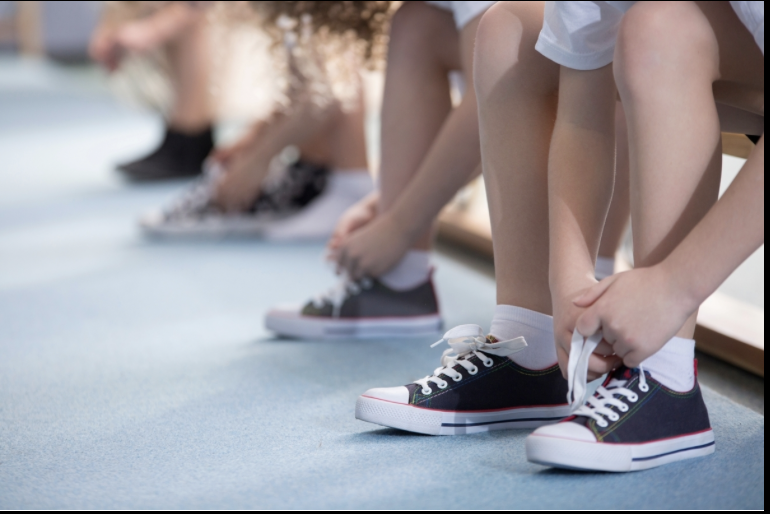
As students head back to school, many are also heading back to the soccer field, volleyball court, track, or basketball court. After a summer of less structured activity, jumping straight into full-intensity practices can place a lot of stress on the body!
Before the season gets into full swing, give your hips and knees some extra attention.
Hip Mobility
Your hips play an important role in absorbing and transferring force during running, jumping, and cutting. When hip mobility is limited, the body may compensate by placing additional stress on the knees or other joints.
Try incorporating:
Half-kneeling hip-flexor stretches to improve hip extension
90/90 hip rotations to work on hip rotation
Glute bridges to activate the muscles that help stabilize the pelvis and lower extremity
Lateral lunges to prepare the hips for side-to-side movement
Build Knee Stability
A stable knee isn't necessarily a knee that stays still, it's a knee that can move and respond to changing forces while remaining controlled.
Single-leg exercises are a great way to prepare for the demands of sports. Try:
Single-Leg Squats: Focus on keeping the knee aligned over the middle of the foot.
Lateral Step-Downs: Slowly lower from a step while maintaining control through the hip, knee, and ankle.
Single-Leg Balance + Reach: Challenge your balance while reaching in different directions.
These exercises can help develop the strength and coordination needed for running, landing, and changing direction.
Don't Forget the ACL
ACL injuries can occur during rapid deceleration, landing, or changes in direction. Injury prevention isn't about avoiding these movements, it's about teaching the body to perform them with strength, control, and good mechanics.
A well-rounded preparation program should include strength, balance, jumping and landing mechanics, agility, and gradual exposure to sport-specific movements.
Avoid the “0 to 100” Approach
One of the best things an athlete can do at the beginning of the season is gradually increase training volume and intensity. If you've spent much of the summer away from repetitive running and jumping, your body needs time to adapt.
And remember: persistent pain, swelling, instability, locking, or a noticeable change in movement isn't something to simply push through. These symptoms are a good reason to check in with a physical therapist.
A strong season starts with a strong foundation.
The Back to School Hustle: For Parents
For parents who are already feeling the weight of the "school year" transition, this offers a tangible way to practice the boundaries and nervous system care you are focusing on in your own life. It turns a chore (the school run) into a gateway for their own physical and mental well-being.
The Concept: "The Post-Drop-Off Reset"
This isn't just a workout; it’s a transition ritual. After the sensory overload of the morning rush—traffic, school gates, and logistical demands—the body is often stuck in a sympathetic "fight or flight" state. This session acts as the physical and mental "off-switch" to signal that the morning survival phase is over.
What to Include in the Session:
The "Decompression" Warm-up (5 minutes): Start with rhythmic, breath-led movement to down-regulate the nervous system. Focus on thoracic mobility and gentle spinal articulation to "un-hunch" from the stress of driving or carrying heavy bags.
Foundational Strength (15 minutes): Use Pilates principles—specifically deep core engagement and pelvic floor activation—to build a sense of stability. When the body feels strong and centered, it is much easier to maintain emotional boundaries throughout the day.
The "Reset" Cool-down (5 minutes): Incorporate restorative poses or specific breathing patterns (like extended exhalations) to ensure the client leaves the mat feeling grounded rather than depleted.
Lifting & Carrying Mechanics: Protect Your Core and Pelvic Floor
Whether it’s a heavy backpack, a stack of books, or helping a younger sibling, knowing how to lift and carry correctly is a lifelong skill that protects your body. For young, growing bodies, building these habits now prevents strain and supports long-term spinal and pelvic health.
The "Power" Approach to Lifting
Before you lift anything, take a moment to set yourself up for success:
Get Close: Stand as close to the object as possible. The further away the weight is from your body, the harder your back has to work.
Wide Base: Place your feet shoulder-width apart to create a stable foundation.
The Hinge: Instead of rounding your back, bend at your knees and hips. Keep your chest up and your back in a neutral, straight line.
Engage the Core: Before you lift, gently draw your belly button toward your spine. Think of this as "zipping up" your core—it creates a natural support belt for your lower back.
Breathe: Never hold your breath! Holding your breath increases internal pressure, which can put unnecessary strain on your pelvic floor. Exhale as you perform the effort of the lift.
Carrying with Care
Once you’ve lifted your gear, how you carry it matters just as much:
Distribute the Weight: If you’re carrying a heavy backpack, always use both shoulder straps. Wearing it on one shoulder pulls your spine out of alignment and creates uneven tension in your hips and pelvic floor.
Keep it Snug: Adjust your straps so the bag sits high on your back, close to your shoulder blades, rather than sagging low toward your lower back
Symmetry is Key: If you’re carrying a heavy bag or item in one hand, try to balance the load by holding something lighter in the other, or better yet, switch sides frequently to avoid overworking one side of your body.
Pro-Tip: If an item feels too heavy to lift with these mechanics, don’t be afraid to ask for help or break the load into two smaller, easier trips. Your body will thank you!
The school year shift often pushes us into "survival mode" before we realize it. This season, AURA Physical Therapy & Pilates is inviting you to move with intention to support your nervous system alongside your strength. Here is how we can navigate the busy weeks ahead:
For Educators: The Teacher’s Toolkit helps counteract desk-bound tension with posture resets and mobility drills to keep you comfortable from first bell to last.
For Student Athletes: Our Athlete’s Prep focuses on hip mobility and knee stability to keep you performing at your best and injury-free.
For Parents: Let’s tackle the "Back-to-School Hustle" with Post-Drop-Off Pilates for a restorative nervous system reset, and Smart Mechanics workshops to protect your back during the daily rush.
You don't have to sacrifice your well-being for the sake of a schedule. Whether you need to reclaim your posture, prepare for a new season, or find a moment of calm, our goal is to provide the tools to keep you grounded and resilient. Let’s integrate some intentional movement into your week to protect your peace—reach out today to book your session and find your rhythm here at AURA Physical Therapy & Pilates.