How to Support Your Heart with Pilates | AURA Guide for combating the winter blues

Staying Heart-Healthy This Winter with Pilates
The cold weather can make it tempting to slow down, stay cozy indoors, and move a little less than usual. While rest is important, this time of year is also when our bodies need gentle, consistent movement the most—especially for our heart health.
February is Heart Health Month, making it the perfect reminder to keep taking care of ourselves, even when motivation feels low.
Why Your Heart Needs You to Keep Moving
Your cardiovascular system works hard every day to deliver oxygen and nutrients throughout your body. A strong heart and lung health is one of the best predictors of long-term wellness and disease prevention. High blood pressure, stress, physical inactivity and poor posture can make us more vulnerable to chronic conditions such as coronary artery disease and metabolic disorders. The good news? Small, consistent habits can make a big difference.
How Pilates Supports Heart Health—Gently and Safely
Pilates is a gentle, mindful form of exercise that focuses on core stability, flexibility, breathing, and functional movement. It’s low-impact and highly adaptable, making it a wonderful option for those recovering from injury, managing pain, or simply looking for a safer alternative to high-intensity workouts.
Research shows that Pilates can improve cardiovascular fitness by increasing VO₂ max, which reflects how efficiently your body uses oxygen. In simple terms, Pilates helps train your heart and lungs to work better—without placing excessive stress on your joints.
Regular Pilates practice has also been linked to:
Lower resting heart rate
Improved blood pressure
Better circulation
Increased arterial elasticity
Improved posture and movement efficiency
Because Pilates feels supportive rather than exhausting, many people find it easier to stay consistent. And consistency is one of the most powerful tools we have for improving heart health.
The Role of Breath and Stress Reduction
One of the most unique and valuable parts of Pilates is its focus on breathing. Learning how to breathe deeply and efficiently helps improve oxygen delivery, calm the nervous system, and reduce stress.
Chronic stress is closely linked to high blood pressure and heart disease. Through intentional breathwork and mindful movement, Pilates helps shift the body out of “fight or flight” and into a more balanced, restorative state—supporting both your heart and your overall well-being.
A Winter-Friendly Way to Care for Your Heart
During colder months, it’s especially important to choose movement that feels accessible, enjoyable, and sustainable. Pilates offers a way to stay active indoors, reconnect with your body, and build strength and endurance—without feeling overwhelmed.
At AURA, we believe heart health is about more than just workouts. It’s about creating habits that support your body, reduce stress, and help you feel strong and confident in your movement.
References:
Fernández-Rodríguez R, Álvarez-Bueno C, Ferri-Morales A, Torres-Costoso AI, Cavero-Redondo I, Martínez-Vizcaíno V. Pilates method improves cardiorespiratory fitness: a systematic review and meta-analysis. J Clin Med.2019;8(11):1761. doi:10.3390/jcm8111761
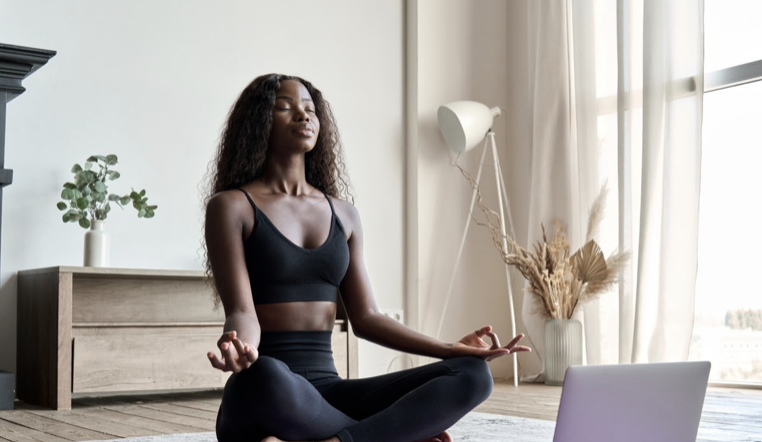
Here are 5 simple, safe, and effective Pilates mat exercises that almost anyone can do at home to support heart health, mobility, and overall wellness. This gentle routine takes about 10–15 minutes and can be done daily.
Move slowly, focus on your breath, and stay within a comfortable range.
1. Diaphragmatic Breathing (Supine)
Why it helps:
Improves oxygen flow, lowers stress, supports blood pressure, and calms the nervous system.
How to do it:
Lie on your back with knees bent
Place hands on your ribs
Inhale through your nose, feeling ribs expand
Exhale slowly through your mouth
Keep shoulders relaxed
➡️ Do 5–8 slow breaths
2. Bridge
Why it helps:
Strengthens core and hips, improves circulation, and supports the spine.
How to do it:
Lie on your back, knees bent, feet hip-width
Inhale to prepare
Exhale and lift hips slowly
Hold 2–3 breaths
Lower with control
➡️ Repeat 8–10 times
3. Single Leg Taps (Modified Single Leg Stretch)
Why it helps:
Builds core stability, supports posture, and improves coordination.
How to do it:
Lie on your back, knees bent, feet lifted to tabletop (or feet on floor)
Lower one foot to tap the mat
Return to start
Alternate sides
Keep core gently engaged and in neutral position
➡️ 6–10 reps per side
Tip: Keep one foot on the floor if tabletop is too challenging.
4. Mermaid Stretch (Mat Version)
Why it helps:
Improves breathing capacity, spinal mobility, and rib cage flexibility.
How to do it:
Sit with legs folded to one side (or cross-legged)
One hand on mat, other arm overhead
Side bend gently
Breathe into ribs
Return to center
➡️ 4–6 reps per side
5. Seated Spine Stretch
Why it helps:
Improves posture, circulation, breathing, and spinal flexibility.
How to do it:
Sit tall with legs extended or crossed (or seated on chair)
Inhale: lift arms out in front of you
Exhale: engage the core to round forward toward legs
Inhale: keep the core engaged, stack the spine to lift back up to starting position
➡️ Repeat 6–8 times
Tips for Practicing Self-care During Winter
This winter has been a cold one! And these winter months can naturally pull us into hibernation mode, limiting the amount of movement our bodies truly need. Shorter days and colder temperatures often keep us indoors and curled forward — on the couch, at a desk, or bundled up against the cold.
Over time, this forward-rounded posture can contribute to slumping through the neck, upper back, and lower back. Hips tighten, legs become stiff, and we may notice decreased strength and flexibility. Without regular movement, the body can begin to feel heavy, restricted, and fatigued.
Intentional movement and intentional breathing, especially exercises that open the chest, strengthen the back body, and mobilize the hips, helps counteract these seasonal patterns. Even a short, consistent routine can restore posture, improve circulation, and leave you feeling stronger and more energized throughout the winter months.
Massage techniques
Suboccipital (Base of Skull) Release
Targets: Suboccipital muscles (common in tension headaches & tech neck)
Lie on your back with knees bent.
Place 1–2 massage/lacrosse balls under the base of your skull (not on the neck bones).
Let your head be heavy; gently nod “yes” or rotate ride to side slightly.
Breathe slowly for 60–90 sec per spot.
Alternative option to use thumbs in circular motion along the base of your skull
Jaw (Masseter + Temporalis) Release
Targets: Clenching, TMJ tightness
Lightly clench to find the bulky cheek muscle (masseter).
Using fingertips, apply gentle circular pressure.
Relax the jaw and breathe through the nose.
30–60 sec each side.
Option: Massage temples (temporalis) with small circles.Upper Back (Thoracic Spine) Foam Roll
Targets: Mid-back stiffness, rounded shoulders
Lie on your back, foam roller across upper back.
Support head with hands, elbows slightly forward.
Lift hips slightly and roll from mid-back to just below shoulders.
Pause on tight spots and take 3–5 slow breaths.
For extension: keep hips down, gently extend over roller.
1-2 minutes
Psoas release
Targets: Deep hip flexor tightness (sitting postures)
Setup:
Tape two lacrosse balls together (“peanut”) or use a peanut ball.
How:
Lie face down.
Place balls just inside front hip bone (ASIS), slightly toward belly button.
Relax body weight onto balls.
Slow nasal breathing, 60–90 sec.
Option: Gently bend/straighten knee to add movement.
Foam rolling lower extremities
Quads: Face down, roll hip to knee.
Hamstrings: Sit on roller, roll glutes to back of knee.
Calves: Cross one leg over the other for more pressure.
Time: 30–60 sec per muscle group.

Kathy Stanford Grant was a pivotal figure in Pilates, particularly in movement rehabilitation. As one of only two Black students certified by Joseph Pilates, her impact on the field remains profound.
Initially a dancer trained by Katherine Dunham, Grant faced a debilitating knee injury that led her to Pilates for rehabilitation. Under his mentorship, she not only healed but also became certified in his method, gaining deep insights into movement and injury recovery.
Breaking barriers in the predominantly white Pilates community, Grant pioneered a more inclusive approach that emphasized individualized instruction and injury prevention. She managed the Pilates program at New York University's Tisch School of the Arts, where she tailored exercises to each person's needs, advocating for a philosophy of listening to the body.
Grant's influence on modern rehabilitative practices is significant, with her methods shaping contemporary Pilates and movement therapy. Her legacy is a reminder that movement and wellness are accessible to all, and her teachings continue to resonate in the Pilates community today.